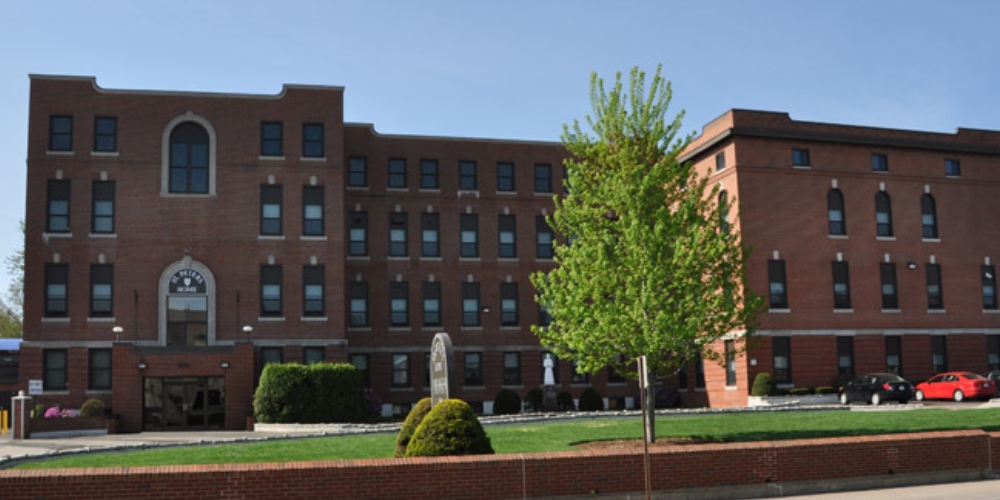
As NH continues to struggle with a lack of affordable child care across the state, St. Peter’s Home in Manchester has a 140-year history of being a safe haven for children.
The child care center, which serves children from six weeks old to six years old, started at Notre Dame Hospital (now Catholic Medical Center) as an orphanage. However, Lisa Comier, executive director of St. Peter’s Home, says back then orphanages not only cared for children who lost their parents but also for cared for children whose parents could not provide for them.
“Families would drop them off Monday morning and pick them up for the weekend and the nuns would feed them,” Comier says. “[St. Peter’s] has always pivoted to the needs of the community and has always been here to serve the children in
the community.”
Notre Dame housed the hospital, the orphanage and a nursing home. Having a bunch of rambunctious children running around was not ideal, so they held many fundraisers and donated land to move the orphanage to Kelly Street, where it still operates.
“What makes St. Peter’s so special is we still have the entire block,” Comier says. “Half a city block is our playground. We have the largest outdoor space for children in the city.”
After the state moved toward placing children with foster families, St. Peter’s Home pivoted to first caring for troubled youth, then pregnant teenage girls before finally transforming into a child care center in the early 1960s. “It’s touched so many lives in 140 years, just thousands of lives,” Comier says.
When it became a child care center, it had just eight children enrolled. St. Peter’s Home is licensed to care for more than 300 children and while it has some open slots in its program for four-year-olds, it has a 15-month wait list for infants and toddlers, Comier says.
When the pandemic hit in 2020, St. Peter’s kept its doors open as the emergency childcare center for Catholic Medical Center employees and first responders. As a result, it did not lose staff as many other child care centers did that were forced to temporarily close their doors, Comier says.
It is fully staffed with 80 employees and Comier notes some have been with the center for 35 to 40 years. “We have amazing staff here,” Comier says. “Everybody understands the heritage and history and puts their heart and soul into it. It feels like a second home for children and their families.”