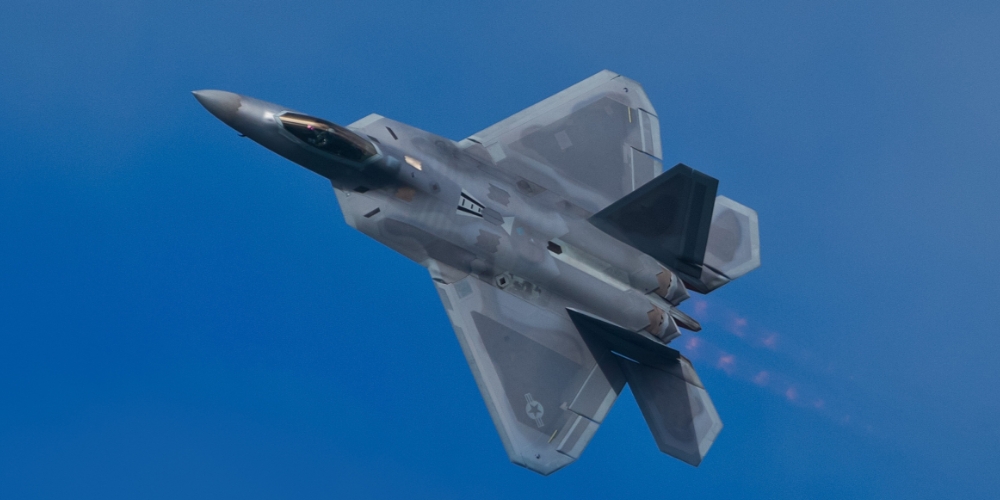
Marmon Defense plays a small but important role in keeping the U.S. military equipped. The wire and cable products it makes at facilities in Hooksett and Manchester and elsewhere are used in warships, aircraft and other military vehicles. And right now, demand is booming.
The U.S. Navy alone plans to spend an estimated $1 trillion to upgrade and expand its fleet over the next 30 years. Those ships will need wiring and Marmon plans to roughly double its workforce in the coming years, including adding another 150 to 200 people in Hooksett.
That is, if it can find them.
“I think our largest challenge right now is getting the workforce trained and hired, and it’s a common theme across all the shipyards as well,” says Bruce Belanger, the company’s senior VP for operations and engineering.
“We’re not seeing a lot of applicants, and part of it, from my understanding, is housing,” he says. “The housing market in the area is very challenging.”
Companies in NH’s aerospace and defense industry say they’re seeing a surge in demand. But as they scale up, companies are working through labor and supply chain constraints, while also navigating the rapid advancement of AI and other
industry shifts.
“Probably the number one issue that we face is that the demand outpaces the number of people we have that can fill the positions,” says Randy Makee, executive director of the NH Aerospace & Defense Consortium. “And it’s because those positions are incredibly technical and require a trained skillset.”
A Booming Business
Increased military spending by the U.S. and its NATO allies, the depletion of arsenals during conflicts like the war in Ukraine, pressure to adapt to the demands of modern warfare, and continued growth in commercial aviation and in space are among the reasons that industry watchers cite for the rising demand.
Congressional budget impasses and last year’s government shutdown have also slowed the release of some government funding, setting the stage for pent-up demand as those funds are released.
“You’re going to have a rush to basically complete those contracts in that set amount of time, and it’s going to squeeze everybody,” says Garrett Partridge, CEO of Nashua-based ARC Technology Solutions, which provides testing solutions for aerospace and defense customers.
Makee says rising U.S. defense spending is the biggest factor driving the increased demand. The 2025 One Big, Beautiful Bill Act boosted defense spending by more than $150 billion, and President Trump has called for an even bigger increase in the Pentagon’s budget in 2027.
“The driver, point blank, is the reinvestment in the United States military, its readiness and capability,” Makee says. That includes military aircraft and the submarine industrial base, which is “booming like nothing anyone’s ever seen.”
At the same time, the federal government is moving toward contracting models that prioritize speed and nimbleness, says Lindsey Berckman, the leader of Deloitte’s U.S. Aerospace and Defense Practice. The rapid development of AI is also poised to reshape the industry. To stay competitive, companies need to adapt.
“The aerospace and defense industry has been dominated by consistent players in the past,” she says. “And what we’re seeing now is new growth, new entrants and new ways of doing work, particularly with AI and digital sustainment.”
One of those startups is Rogue Space Systems, a Laconia-based space logistics company founded in 2020 that develops autonomous space vehicles and robotics for satellite servicing, logistics, and in-orbit mission support. Five years ago, government space funding was focused on R&D, says President and Chief Strategy Officer Jon Beam.
Now, “they’re asking how quickly can we get this to market, and show us your quality programs, show us your capabilities,” he says. “They are really feeling a lot of intense pressure to get systems up there and working.”
Beam is also expecting rapid growth over the next several years on the commercial side, as space-based manufacturing takes off.
Looking for Talent
Companies are ramping up hiring in response to rising demand, but some are running into challenges.
Londonderry-based Nu-Cast, which makes aluminum castings for the aerospace and defense industry, has a staff of about 45. Vice President of Operations Jason Lees says they could probably add another 10 to 15 people based on the demand they’re expecting this year, “but that’ll be difficult.”
He says few people are familiar with the process the company uses, which is called investment casting. To drum up interest, Lees is going to local schools and colleges to teach students about it.
And while southern NH has a rich pool of engineering and high-tech manufacturing talent—a legacy of the longtime presence of major defense contractors like BAE Systems and Raytheon—that workforce is aging, says Daniel Wyatt, ARC’s sales and marketing lead.
“There’s a little bit of a disconnect between maybe the older, more mature workforce that is close to retirement that has the technical knowledge and the demands of a modern company in 2025, and the pace and the sense of urgency and the technology requirements,” he says.
The good news, Makee says, is “there’s a lot of people working very hard on solving this problem.” That includes industry partnerships with educational institutions like Manchester and Nashua Community Colleges that offer manufacturing programs tailored to industry needs thanks to their close partnerships with companies like Granite State Manufacturing, he adds.
One of the companies benefitting is Microsembly, a contract manufacturing and advanced microelectronic assembly firm in Merrimack serving mostly defense and aerospace customers.
The company has invested heavily in automation to meet rising demand with fewer workers, says Katie Francis, director of sales and business development. But when it needs to hire, it has had success with Nashua Community College’s 10-week microelectronics boot camp, a program founded in partnership with BAE Systems that teaches the basics of techniques like ribbon and wire bonding. “It gives us access to a pool of candidates when we need them,” she says.
Berckman says equipping workers with AI-driven tools and the skills to use them will be critical in the coming years. With increasing competition for workers, companies will need not only more compelling ways
to attract talent, but also to “give the talent the tools to become more effective with their day.”
Supply and Demand
Workforce isn’t the only challenge facing the industry. Tariffs and geopolitical instability make global supply chains more fragile, meaning it’s even more important for companies to invest in redundancy, Berckman says, especially because the heightened requirements in the defense industry make it harder to swap out suppliers on a dime.
And those standards will only get more difficult to meet as the Defense Department is tightening cybersecurity requirements for suppliers that do business with defense contractors, says Partridge at ARC Technology Solutions. Company officials are deciding between maintaining separate supply chains for the defense and commercial sides of their business or incurring extra costs by sourcing entirely from suppliers with the required certifications.
“The stakes to be a supplier in the aerospace and defense industry—that tide continually rises,” says Wyatt. “The cost that a company like ARC might have had to incur to be a supplier 10 years ago, it’s probably 10x that now with some of
these regulations.”
One of the biggest supply constraints for space manufacturers is space-hardened solar panels, which have long lead times, says Beam of Rogue Space Systems. “Hopefully U.S. policy will bring some more solar panel development back to the U.S. and we can shorten supply chains.”
At Haigh-Farr, a Bedford company that makes antennas for missiles, satellites, planes and other airborne vehicles, a key strategy for managing increased demand has been to invest in “state of the art automation” and keep as much as possible in-house, including the engineering hardware build and testing, says CEO Norene Farr.
“It is amazing, the demand growth we have seen,” she says. “My backlog has never been higher, and 2025 finished out 17% higher in sales than 2024.”
While the company doesn’t have a huge supply chain, it sources as much as it can locally. “We also maintain the in-house ability to produce most of the piece parts that go into our antennas. That gives us a lot better control over cost schedule and, obviously, quality,” she says.
In Makee’s view, the biggest supply chain constraint the industry will face is the supply of rare earth metals used in electronics and other applications. But, he adds, NH has at least two companies working on that problem—Soldier Systems in Swanzey, which recovers germanium from discarded military equipment, and Phoenix Tailings in Exeter, which extracts metals from mining byproducts.
Makee says the demand for NH’s aerospace and defense products isn’t waning anytime soon. “The Navy is woefully behind in fulfilling its orders,” he says. “They are absolutely pushing as hard as they can to get the industrial base to step up and help them meet their demand.”