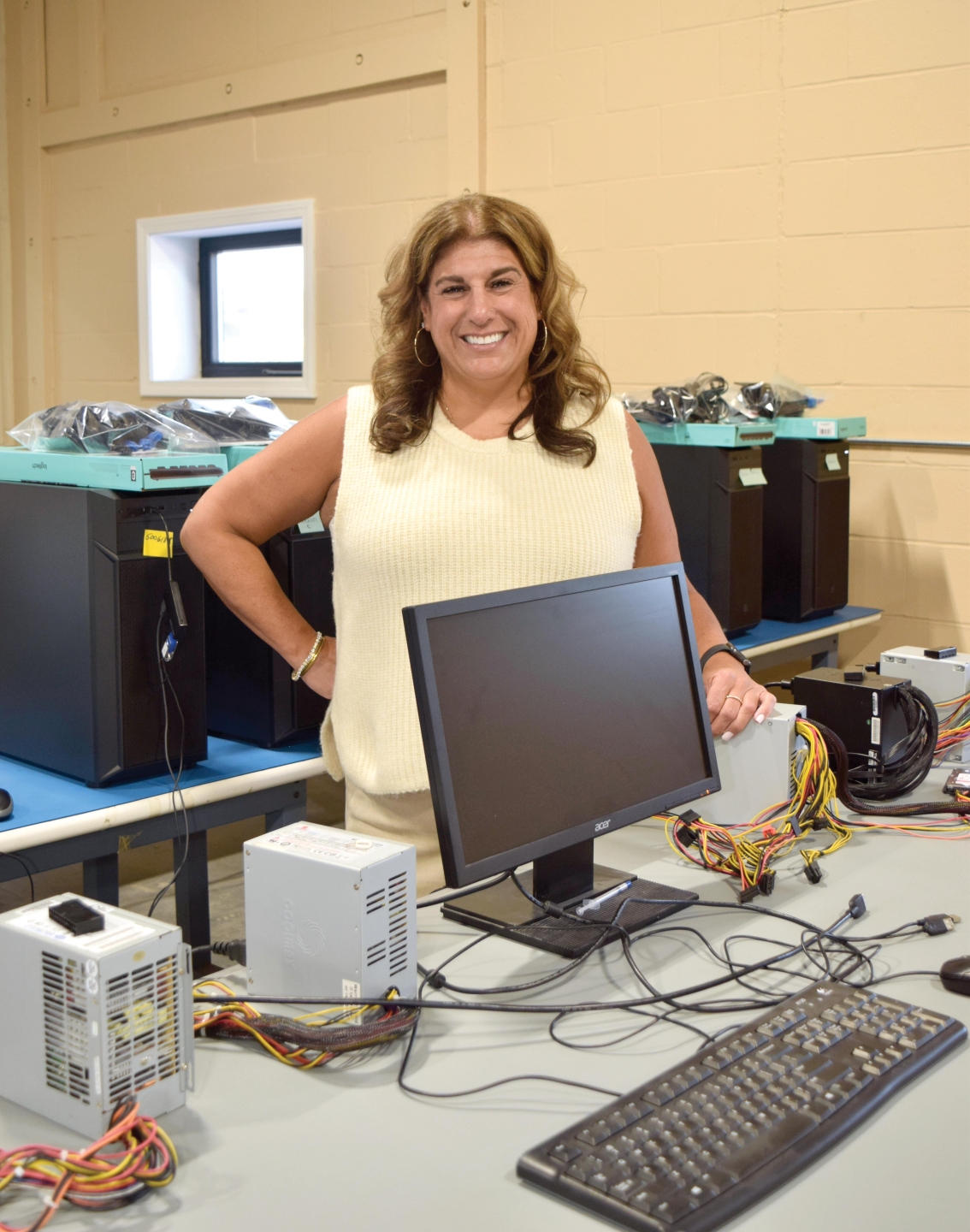
Leah Walsh has seen computer operating systems come and go, and witnessed workplace information technology evolve over her 20 years leading Global American, a Nashua supplier of enterprise computer hardware and provider of professional software support.
However, many of her 10-person team have remained with the company for years, working with clients in health care, industrial and biotechnology sectors, and military and government. They sell those clients large quantities of embedded computing hardware—durable PCs, motherboards and other components.
“We provide a lot of the computers that go inside, say, the scanning machines at the airport, or the bedside computer at the hospital, things like that,” Walsh says. “Embedded computing is more rugged than something you’d buy at Best Buy.”
Some clients have also been multi-decade buyers and they’ve requested “smaller, faster and cheaper” devices that didn’t exist when Walsh became president in January 2005. “Now, we are selling palm-sized PCs and little powerhouses, whereas 20 years ago, a lot of our customers were getting massive chassis,” she says. “All the fun AI stuff hasn’t really shown up yet in the embedded arena as much as in the commercial, but it’s starting.”
Walsh took over Global American’s leadership from her father 16 years after the business’ founding (though he remains CEO in retirement). She says that during her tenure, employment has shrunk as the company does “more now with less, maybe because we just have the right employees.”
Still, the company is expanding its 7,400-square-foot production area to allow for greater hardware testing and gradually hiring new technicians. Those moves come despite tariff impacts necessitating sale price increases, which Walsh says Global American has promptly communicated to customers.
As Global American eyes an uncertain economic future with shifting tariff rates, Walsh says strategic thinking is crucial to planning shipments. “With a 10% to 15% tariff, you can absorb some of that, but you can’t absorb a 45% tariff from China,” she says. “A lot of that, unfortunately, we’ve had to pass along to our customers who’ve been fairly understanding on it.”