
This is the third in an occasional series leading up to the 275th anniversary celebration of the Town of Salem, N.H., an event called “Salembration,” planned for Aug. 9.
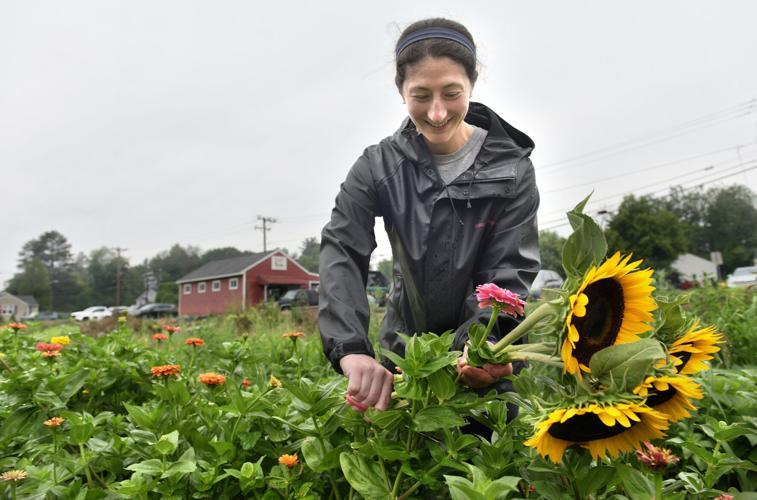
Caitlin Lee, the daughter of Mike Peters, co-owner of Peters' Farm in Salem, N.H., cuts fresh flowers to be sold at the farm stand. Lee is also a teacher but helps with the family farm in the summer. (TIM JEAN/Staff photo)
SALEM, N.H. — Each morning, sometimes before dawn, the Peters family tends to their farmland, handpicking crops such as beans, snap peas and corn to sell at their farm stand on Cross Street.
By the time most people are leaving for their day jobs or drinking their weekend coffee, the morning harvest is done. It’s been this way since the 1800s.
“We plan our lives around farming,” said John Peters, a third-generation farmer. “We have our children in the winter.”
The farm is recognized by locals and passersby as one of the longest standing farms in the area, known for its traditional values and practices and visited again and again for its nostalgia and fresh-picked produce.
A new sign on the famous little red farm stand. (TIM JEAN/Staff photo)
Origins in the 1800s
Though the family first bought land in Salem in 1911, their farming origins date back to the 1800s to a part of Turkey known as Western Armenia where their Armenian ancestors were used as indentured servants on Turkish farms.
They couldn’t own land, their homes were made out of mud and they didn’t have wood to burn. From their one cow, they could make cheese, milk and yogurt and burn the manure to stay warm during the winter months.
The life-changing decision to immigrate to Lawrence, where the family settled prior to relocating to Salem, saved the family from a mass genocide during World War I that killed between 600,000 and 1.5 million Armenians living in Turkey.
“There was a lot of erasure of the Armenian culture there and there are a lot of us that immigrated to this area,” said Matt Peters, a fourth-generation farmer.
The area was largely populated by Germans at the time when James (Jamgochian) Peters, the farm’s founder, bought a barn, a house and some farmland on Cross Street, then known as Salem Street, from a German family. Many other Armenian families followed the same path.
“When they moved here, they picked up farming because it was the only thing they knew,” Matt Peters said.
The Peters owned 100 acres of undeveloped land from Cross Street to what would become Interstate 93 and down toward the border of Methuen.
“There was the house, then there was the original barn that was there where they picked everything and stored it,” Matt Peters said, looking across the street at the property, which is no longer owned by the family. “We’ll own it again one day.”
On either side of the property, and across the street, are homes owned by various members of the Peters family – brothers and sisters, aunts and uncles, grandparents and cousins.
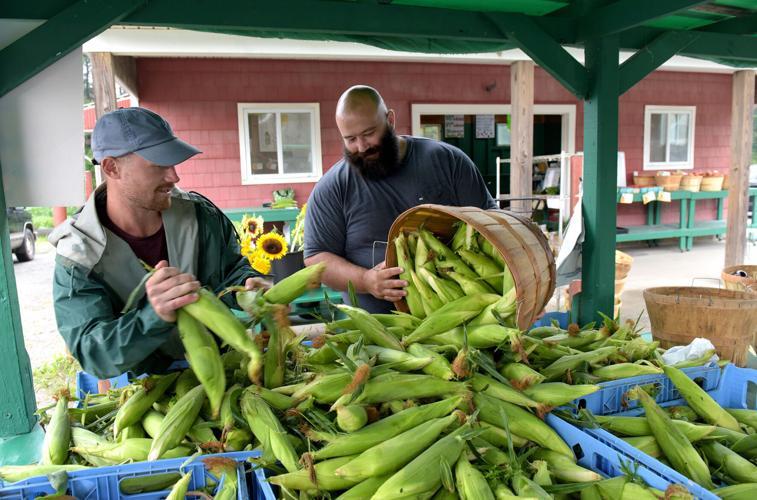
Longtime friend and Peters' Farm employee Johnny Klecan, left, and Dan Peters refill the wagon with freshly picked corn. (TIM JEAN/Staff photo)
From Horse to Tractor
Up until 1943 when the family got their first tractor nearing the end of World War II, they relied on a horse-drawn plow to maintain a few of the 100 acres they owned.
“Imagine, going from a horse to a tractor,” said John Peters. “They could only do a few acres at a time back then because the horse would go a little ways and it would get tired.”
Around the same time, unable to make a steady profit, farms in the area started to close their doors and sell off their land. One by one, the number of farms started to dwindle and the land was developed. Cross Street alone had five farms, John Peters recalls from the tales told to him by his father, Charles.
“As a kid in the ‘70s, there were still a lot of farms around here and you could still find open land,” he said. “It was less than $100 for an acre at that time.”
“But they didn’t make any money wholesaling which is why eventually got out of it,” Matt Peters added. “During the ‘60s, ‘70s and ‘80s, farmers got sick of making nothing and tried opening up their own little spots to sell what they had.”
“The farm stand is what saved farming,” John Peters said.
Forced to sell bits and pieces of their own land, the Peters family now owns around 45 acres in Salem and Chester and leases additional land from farms in five different towns, including Salem, Methuen and Sandown.
Still, it’s the largest operating retail farm in Salem, often selling produce from other local farms at the farm stand, John Peters said.
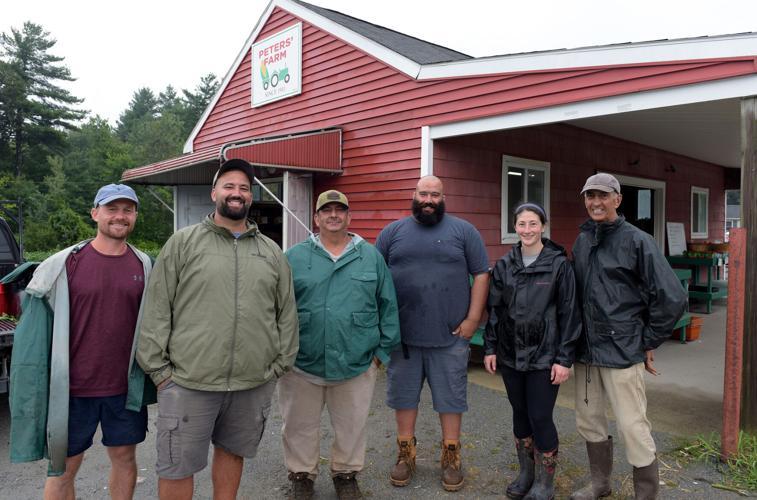
Gathering near their farm stand are, from left, Johnny Klecan; Dan Peters; his father, John Peters; his son, Matt Peters; Caitlin Lee and her father, Mike Peters, at Peters' Farm in Salem, N.H. (TIM JEAN/Staff photos)
A Dying Breed
“Farming is very much a dying breed and it’s a scary thing. Every few years, we hear about another farm closing out,” Matt Peters said. “There was a time where you could, say you were out of something, you could go to another farm and get as much as we want. There isn’t much of that around here anymore.”
In its place are smaller pop-up farms that follow the farm stand model – they grow fruits and vegetables on a small parcel of farmland and sell them from their homestead.
Though there are other large farms wholesale farms still operating in Salem, the model at Peters’ Farm is different. It’s family oriented, customer focused and retail driven.
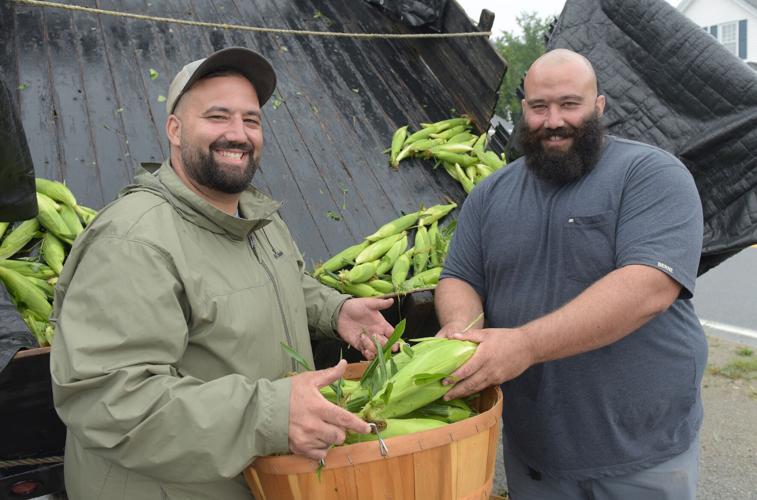
Brothers Matt and Dan Peters gather freshly picked corn from the back of a truck. (TIM JEAN/Staff photo)
Forging ahead, the fifth generation of farmers, in the fits and throes of their elementary and middle school years, are fascinated with farm life and farm equipment. One day, they’ll take over the farm in place of their fathers, uncles and cousins.
John and Matt Peters hope their kin are as passionate about farming as they were.
“Farms don’t stay in business without the next generation,” John Peters said. “Without them, it stops.”

Freshly picked peaches are now in season at Peters' Farm. (TIM JEAN/Staff photo)
These articles are being shared by partners in the Granite State News Collaborative. For more information, visit collaborativenh.org.