
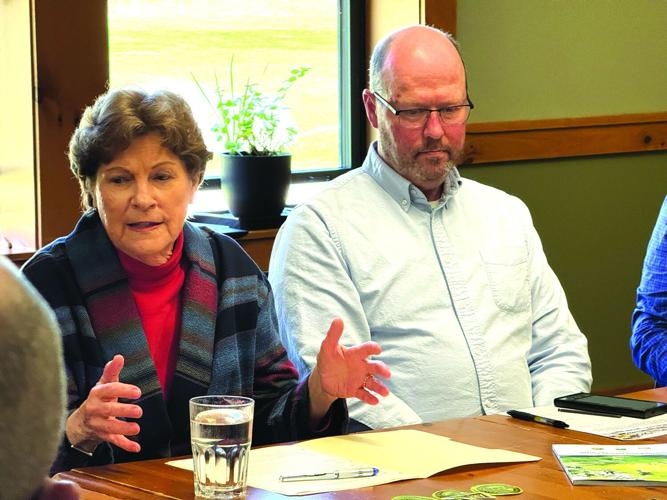
U.S. Sen. Jeanne Shaheen (D-N.H.) is seen at a meeting on the future of Bartlett Experimental Forest at the AMC Highland Center in Crawford Notch on Friday, April 16. (TERRY LEAVITT PHOTO)
CRAWFORD NOTCH — U.S. Sens. Jeanne Shaheen and Maggie Hassan (both D-N.H.) hosted a roundtable at the Appalachian Mountain Club’s Highland Center last Friday to hear from scientists, foresters and conservationists about the future of Bartlett Experimental Forest.
The meeting followed last week's announcement that U.S. Forest Service is being reorganized. Its headquarters are moving from Washington, D.C., to Salt Lake City.
Also announced was the planned closure of the Bartlett forest, which is one of two experimental forests run by the U.S. Forest Service in New Hampshire. The other is the Hubbard Brook Experimental Forest in Thornton.
Shaheen, who arrived directly from a visit to Hubbard Brook, told the gathering of experts: “We're in a real crisis situation," adding there is no transparency about how the decisions are being made.
She said, “I think the only way to respond to it is to get as much attention to what's going on and what the negative impacts would be as possible."
She asked those present about what they thought the impacts would be if “Hubbard Brook and Bartlett and so many other things are closed.”
The meeting brought together over a dozen people representing state and federal agencies as well as private non-profits focused on forests and ecology. Among them were Mariko Yamasaki, retired former director of the Bartlett forest, and Anthea Lavalee, director of Hubbard Brook, along with retired White Mountain National Forest Supervisor Tom Wagner and Steve Fay, another retired forest service employee.
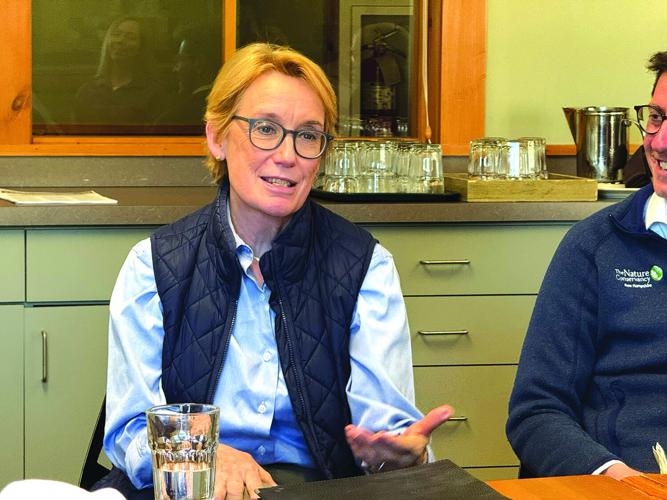
U.S. Sen. Maggie Hassan (D-N.H.) lead a meeting on the future of Bartlett Experimental Forest at the AMC Highland Center in Crawford Notch on Friday, April 16. (TERRY LEAVITT PHOTO)
Also present were Chris Thayer and Georgia Murray of the AMC, Jason Stock of N.H. Timberland Owners Association, Jim O'Brien of the Nature Conservancy, Matt Leahy of the Society for the Protection of New Hampshire Forests, Mike Morin of the Northern Forest Center and State Forester Patrick Hackley.
Bartlett Experimental Forest — an approximately 2,600-acre wooded parcel carved out of the White Mountain National Forest in the town of Bartlett — is one of the oldest of the 84 experimental forests run by the U.S. Forest Service.
Work there began in the 1920s to study northern hardwood forest management as the once deforested region began to grow back. Forestry and ecology experts say research conducted there is incredibly valuable.
Retired forest service employee Fay said if the studies just stop, "we never get to see the outcome of what was done to manipulate the forest in some way, wildlife habitat, species, composite, all the all the ecological topics we've been researching for decades. That's not how good research should be managed."
He said he and others have been working to gather letters in support of keeping the research stations open.
To start, they reached out to about 100 people. "To a person, they said, 'You just tell me when you write the letter,'" he said, and they would sign it. "People's emotions about both Bartlett and Hubbard Brook are deeper than you might expect. ... I think we're going to get a lot of response."
Although Hubbard Brook — which was established in 1955 and whose data was used to create the Clean Air Act — has not been listed to be closed, its director said, its future is by no means secure.
"The guidance is really skimpy," Lavalee said, noting that "there are two experimental forests on the closure list, Bartlett, inexplicably, and Hilo in Hawaii. The other 82 experimental forests and ranges across the country are in this limbo. We are under 'evaluation.' No one knows exactly what that means."
She added, "From what we're hearing, it seems like this next phase of the reorganization will happen after fire season."
She also said, "They seem to be pointing to the number of Forest Service staff on site as an indicator of productivity. ... Of course, the number of staff has been artificially suppressed because of the sustained hiring freeze — and it's a horrible situation at Bartlett where you're down to no one."
That does not mean research is not currently being done there — just that there is no U.S. Forest Service employee stationed full-time at the site.
Lavalee continued, "At Hubbard Brook, we usually have a six-person forest service staff; we're down to three."
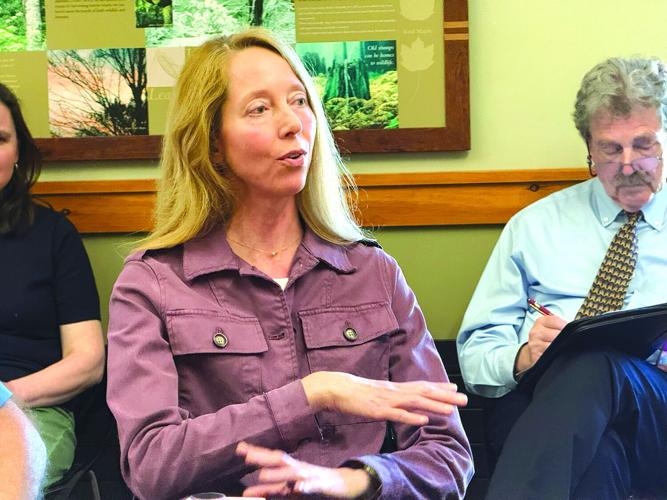
Anthea Lavalee is the director of Hubbard Brook Experimental Forest in Thornton. (TERRY LEAVITT PHOTO)
The group also agreed that it is a bipartisan issue and talked about getting more Republicans, including Gov. Kelly Ayotte, to weigh in.
The U.S. senators' staffers said they had been in touch with the governor's office.
Murray, who is a senior scientist and assistant director of research for the AMC, said: "If you think about all of the students that have been trained, and maybe the foresters that have been trained, absolutely incredible legacy and economically, that's a huge thing as well."
Yamasaki said many people have already responded with alarm and dismay to the proposed closure of the Bartlett forest. "It's wildlife biologists, it's foresters, it's private land consulting foresters. It's land trust people, it's national forest interest folks, it's people that had no relationship to the forest service other than they’re users. They appreciate the place."
Hassan said the meeting was very helpful. "We know that there are a variety of ways to address this really misguided reorganization plan. And I think hearing firsthand the critical importance of the work that is done at our experimental forest by the National Forest Service generally and the importance of having a regional field-based approach is a case we should be able to make to the administration."
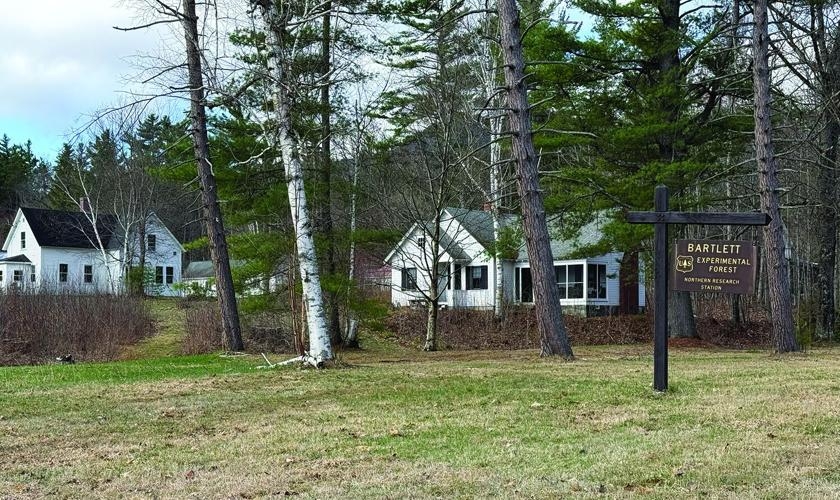
The U.S. Forest Service research headquarters for the Bartlett Experimental Forest (some of the buildings for which are seen here) are located at the northern end of Bartlett Village. (TERRY LEAVITT PHOTO)
She added that the voices of individuals are also important.
"When Granite Staters know that there is an issue that is important to them, they speak up, they speak out, and they make their voices heard. And that really does make a difference," she said.
These articles are being shared by partners in the Granite State News Collaborative. Don’t just read this. Share it with one person who doesn’t usually follow local news — that’s how we make an impact. For more information, visit collaborativenh.org.