
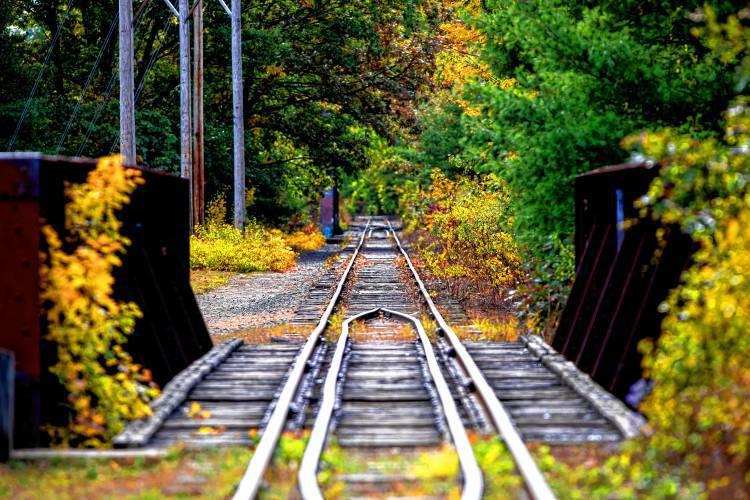
The railroad bridge near the Hannah Duston Memorial site in Boscawen is the turnaround area for the Scenic Railriders carts. (Geoff Forester, Monitor staff)
Chris Miller has mapped out in his mind where he stops for food on the long bicycle ride from Boscawen to Lebanon along the Northern Rail Trail. He’d like to put Concord, his hometown, on the map, too.
“It’s not just about this 5.7 miles,” he said. “There’s this stark gap in this part of the state. This helps fill that.”
To Miller, extending the Merrimack River Greenway Trail from Concord’s downtown would create better access to the growing regional rail trail network and open the doors of more city businesses to trail users from across the county.
Concord city councilors voted nearly unanimously on Monday night to approve the purchase of the CSX rail corridor, clearing the way for the removal of tracks.
The decision means almost certain death for a unique and popular local business, the Scenic Railriders, unless a compromise can be found.
While several Concord city councilors expressed hope that a solution could be found, they weren’t willing to risk losing the grant funding needed to build the trail by negotiating or delaying any further.While the door wasn’t completely closed to talks with the Scenic Railriders, Mayor Byron Champlin said it was open only “a crack.”
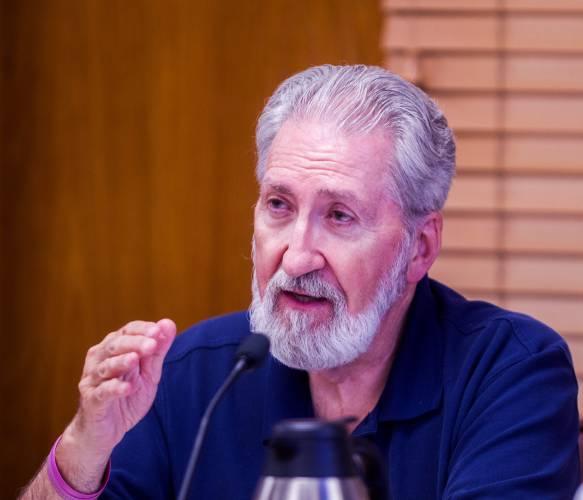
Concord Mayor Byron Champlin
“It seems like the city just kind of wants to give up on us as a small business, ” said Gary LeBlanc, who owns the Railriders with his family. “Give us a shot at proving that we can coexist with a trail.”
The Concord City Council and the Friends of the Merrimack River Greenway Trail have been eyeing this stretch of track since it was declared abandoned in 2017.
Councilors approved a nearly identical purchase four years ago, but the plan stalled, at first because the state exercised its right of first refusal over the land. Later, the company that owned the tracks, Pan Am, was sold to CSX Transportation.
The sale agreement endorsed by city leaders on Monday comes with a higher price tag and a provision requested by CSX that it would have the right to salvage the current rails.
Those same rails are the foundation of Gary and Carolyn LeBlanc’s business.
The LeBlanc family built their rail bikes – four-wheeled pedaled cars that cruise on railroad tracks – by hand in their garage. Today, they bring in thousands of customers every summer, especially tourists from out of state.
“I have traveled the country checking out various other rail bike tour companies,” said Daniel Day, who is trying to launch a rail biking business on the seacoast. “I’ve got to say Scenic Railriders truly is world-class and Concord is very lucky to have them.”
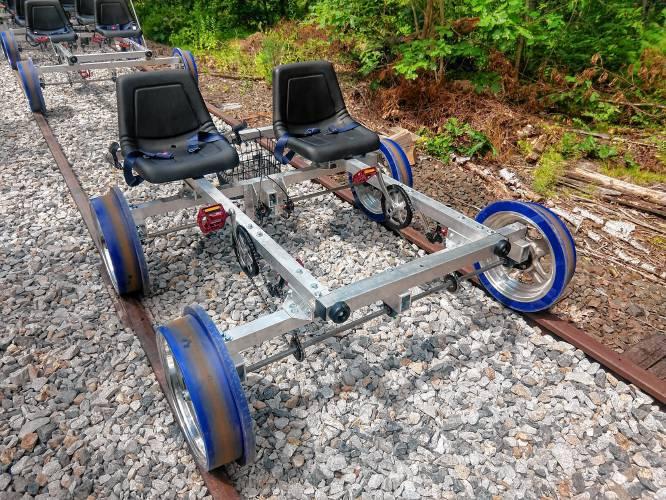
A self-pedaled “rail bike” used by Scenic RailRiders in Concord is shown.
The LeBlancs pleaded with city leaders to consider building the greenway trail alongside the tracks, rather than tearing them up. Portions of the track are already double wide, and with a sewer easement in the area, bikes and pedaled railcars could co-exist, Gary LeBlanc said.
“We are the definition of ‘mom and pop,’ ” said Matt LeBlanc, who works with his parents. If their business closed, local restaurants and hotels would lose the customers they bring to the city.
Tim Sink, as the President of the Greater Concord Chamber of Commerce, noted the chamber enthusiastically supported the Greenway Trail for years, but he also expressed a hope that city leaders do what they could to work with the Railriders.
“They have a proven track record of attracting visitors and generating a positive economic impact on this community,” Sink said. “I just would encourage that we exhaust a full investigation and understanding of anything that we can do to keep both of these amenities.”
Greenway Trail backers maintained that renegotiating the purchase agreement and redesigning the trail posed an existential threat to the project, by adding costs and giving the federal government reasons to pull their $1 million grant that would pay for construction.
“Doing a parallel facility is not as easy as it sounds,” said Greg Bakos, a transportation engineer affiliated with the Greenway Trail. Alongside site work to widen the buildable pathway, bridges and culverts would have to be widened, he said.
The city would also have to go back to CSX to gauge their appetite, and their asking price, for forfeiting some of the salvage claim they requested.
The state has been sitting on a federal transportation grant for this project since 2021.
“We feel we’re on thin ice right now. It’s been so long,” Bakos said. “The feds don’t like to let projects languish.”
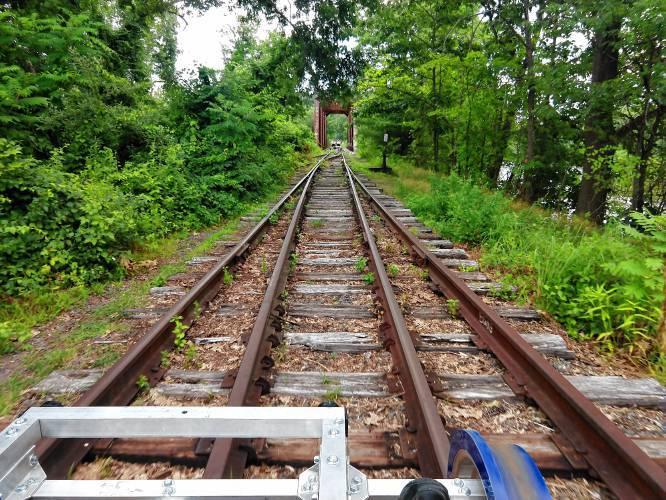
Members of the Kearsarge Chamber of Commerce took a tour of the Scenic RailRiders attraction off Sewalls Falls Road, which opened this weekend. The tour takes riders on a 6.4-mile trip along railroad tracks using self-pedaled "bikes." (Daniel Watts—Courtesy)
John Corrigan knows the risk of grants getting pulled. In his years as a program planner at the state Department of Transportation, he saw it happen many times.
“We can’t let one business block it,” he said. “I’m afraid that if you have more delay to do that, you’re going to lose the grant. That’s a very realistic possibility.”
As someone who commuted by bicycle from Penacook to the state offices on Hazen Drive, he added, the trail offered a sustainable and safe route.
Despite expressions of sympathy and appreciation for the Railriders, the council approved the sale agreement as written.
“I think as a city it’s extremely important for us to have dialogue with business owners who have thrown in their personal stake to make something special happen in the city of Concord,” said Judith Kurtz, who holds an at-large seat on the council. She urged City Hall to search for solutions, but voted to move forward with the sale: “I do it with a heavy heart.”
A similar conflict unfolded in the Adirondack Mountains of New York about a decade ago, when New York State announced plans to transform a 34-mile length of railroad into a recreational trail. A rail biking business had opened there in 2015, hoping to make the region its home for years to come. A daily scenic railroad also used the legnth of track, and a legal dispute ensued.
In the end, the state removed the tracks and built the Adirondack Rail Trail. It opened last year and saw more than 92,000 visitors in its first six months, according to reporting in the Adirondack ExplorerAdirondack Explorer.
Rail Explorers, the rail bike company in that case, closed its operations but expanded elsewhere. Today, the company spans six locations across the country, from Rhode Island to California.
The Railriders don’t have that level of scale to fall back on.
“If they pull up this track I’m operating on, I’m done. I’m out of business,” LeBlanc said.